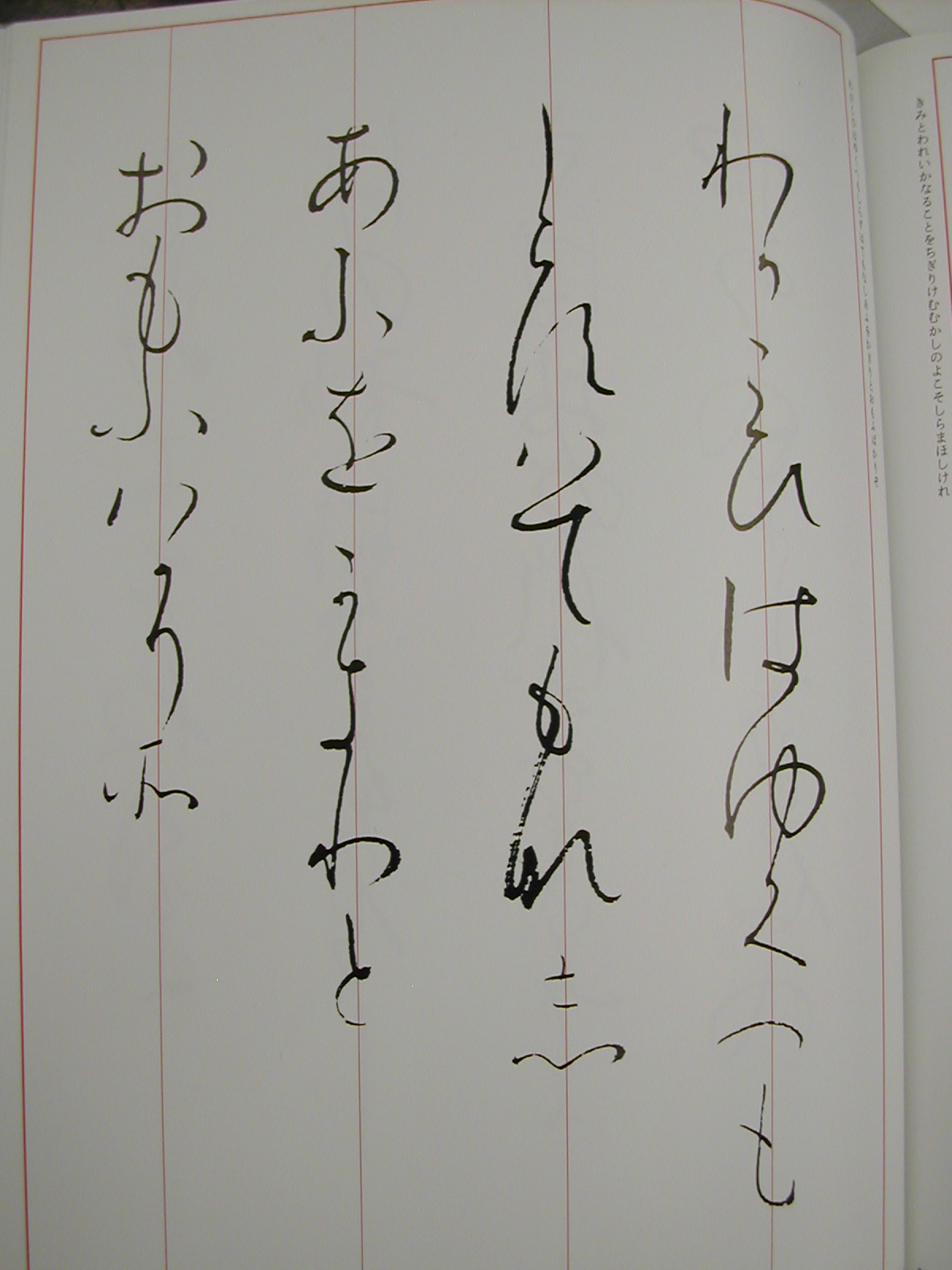
A while ago, a Japanese friend of mine told me that her American husband said that spoken Japanese sounds like staccato. Japanese is my native language, so I can’t tell the sound objectively. But if the language sounded in staccato, it would be certainly not a beautiful language. But we Japanese think of our language beautiful. Separately, most people would agree that the French language sounds beautiful. I absolutely agree. So and but, I hope you don’t ask me which is more beautiful.
Because of the staccato element, I want to talk about beats. Japanese beats are very simple. I envy the beginners of Japanese language because I’ve been struggling with English even now. So if you’re beginners in Japanese, you have advantage.
According to the book, “Japanese,” by Kindaich Haruhiko, a linguist, Japanese language has 112 beats, and English has over 3000. For instance, tobichiru (splash) is 4 beats because we can separate it as to-bi-chi(or ci)-ru. In English, splash is only one beat. I didn’t know this until recently. No wonder I had hard time in making English haiku in the past.

Since the number of Japanese beats is small, children can memorize them pretty easily. And they can also dictate what they hear pretty easily. They just need to write as they hear each beat. So once you learn all the beats, anyone can search any word in the dictionary. In English, we have to know how to spell at least the first alphabet such as “know.” In Japanese, if you master all hiragana, you can write. No spelling needed in writing Japanese. Isn’t that great?
But as always, behind the simplicity, complex features are hidden. I don’t know why, but we have many same sounding words. The other day, I replied back to Jitu on my “Names and Preference” blog about the meaning of Keiko,. Jitu looked at a few Web sites and found two translations of Keiko. First, I don’t know how they came up with those meanings. Second, our names usually come in Kanji, and each kanji has a unique meaning. There are many different kanji for Keiko. Pronunciations can be the same. Also we have same sounding verbs and nouns. So when we speak, sometimes, we miscommunicate. This is a downside to Japanese language. To avoid miscommunication, we need to put extra effort to describe it clearly in any way we can.
So, Japanese beats are simple but other things are complex. And like heart beats, we breathe and sleep with them day in and day out. We feel comfortable and our aesthetic comes out of those 112 simple beats.
The author of “Japanese” wrote an interesting story. In the beginning of WWII, Hitler made a visit to Japan. I didn’t know that. I was surprised to read this. Anyway, Kitahara Hakushu is a very famous Japanese poet. He was asked to make a welcome poem for Hitler—can you imagine?-- and someone composed a melody. At that time, they all didn’t know what Hitler was up to, I guess. Isn’t that weird? A professor who sang the song followed the German way of singing. To Hakushu, the beats were all wrong. They had a heated argument.
Anyway, the author went on to say that Japanese are sensitive to our beats because not many exist. To this statement, I agree.